Saturday, 28 April 2012

Flowers for the garden.

As we all know our bees are in decline, as bee keepers we are trying to help. We can also help by planting our gardens full of plants that are good for bees. The RHS produce a list of plants that they have dubbed 'Perfect for Pollinators'. If you see this logo you can be sure it's going to help the bees with either nectar or pollen.

For those budding gardeners among you the full list is on the RHS site just follow the link. Perfect for Pollinators.

Dave


Tuesday, 24 April 2012

Hive production


 Hive site at bottom of garden, last years bait hive still empty.

Having sorted the area in the garden for the hives, thought it was about time to get building. Fortunately work throw away lots of timber, so manage to get my hands on some good stuff. Lots of nights in the garage and we're nearly there. 

  
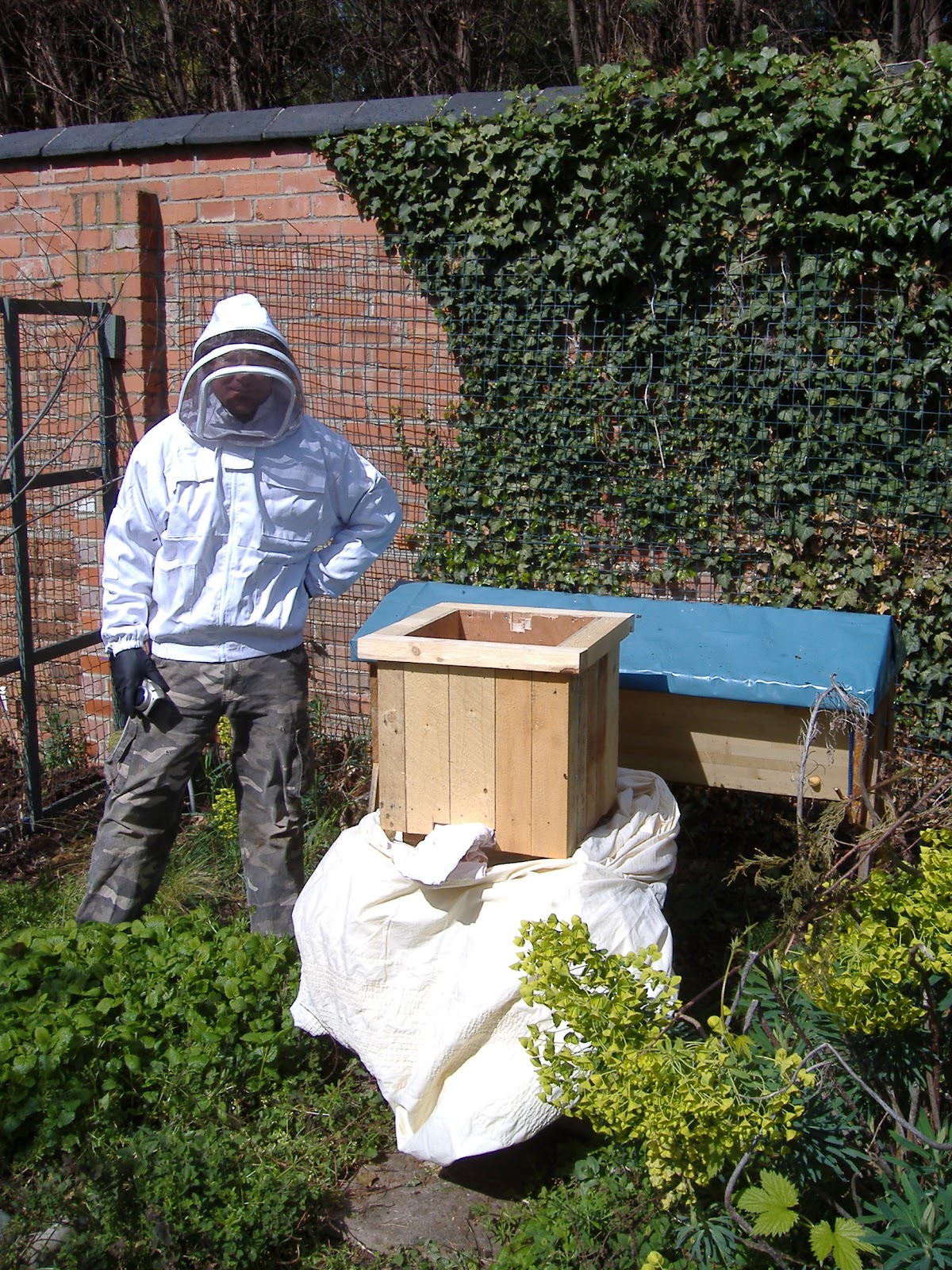
The lads decided they want to help out with the bees so they've adopted a hive and are in the processes of painting it. So this meant having to spend the folding stuff and they now also have there own bee suits ready for the bees. 


This weekend should see the legs fitted and them all in place, and then we play the waiting game for the bees. 


Bait hives (plant pots) will also be going out and about just need to sort out some lids.


Dave.

Monday, 23 April 2012

One week in....

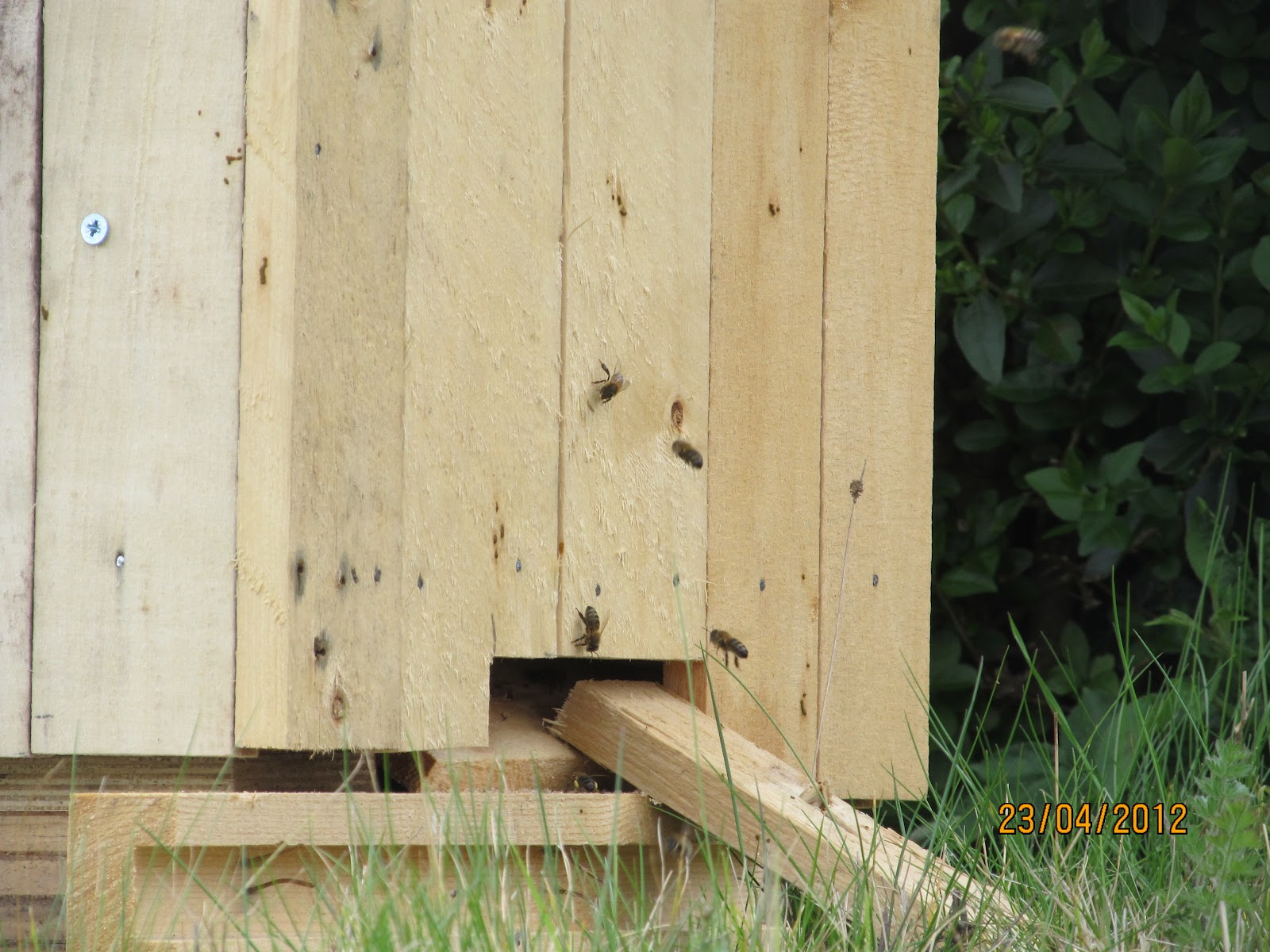
All seems ok despite the heavy rain nearly everyday since they moved home. The first couple of days the bees stayed very close to the hive, mostly just crawling around on the sides and have progressed to flying further and further since then. They don't emerge until 1030-1100 ish and are back in by 1500ish weather permitting, but at least they are going off to do their stuff and returning. They don't seem to be foraging in the garden but instead take off, get lots of height and are off over the houses. Another week of rain forcast, but hopefully they will  stick it out and cary on doing what they're doing!

Sunday, 22 April 2012

Three's a crowd.........

During the evenings of the past week I have been working hard on building a new top bar hive. For £35 I bought a load of 6 in. 'gravel boards' which will be enough to make two 38ins. long hives. I've decided to make the whole structure double walled, so 2ins. thick, in order to provide more insulation. The downside of this is that the hive is now very heavy, but once in position it should be very stable. On this new hive I have dispensed with the mesh bottom and will utilise a solid, removable, bottom board instead. I know that beep'er Tim in Castle Donington has a completely open hive bottom and has a thriving colony; again proving there is no official 'right' or 'wrong' way to do things in TBH world. Once completed I intend to locate this hive opposite the existing one to act as an insurance policy for possible problems in the future. I will initially prime it as a bait hive to try and catch a swarm.

Talking of swarms, and referring to the title of this post, I have distributed the first three of the experimental cardboard bait hives I made recently. Two have gone to an idyllic location, a small island in the River Soar owned by beep'er Shane. He already has two, as yet empty, TBH located there but two more potential homes can only increase our chances of catching a swarm. Shane intends for the island to be a wildlife haven and gave me a brilliant mini tour and entertaining boat crossing. Excellent Boys Own fun!  

Shane on the island with his two top bar hives.
You can just see the main channel of the
River Soar in the background.
(Apologies for the misplaced fig leaf!)

The other bait hive was collected this afternoon by beep'er Alison who has, what sounds like, an excellent location in a small strip of woodland backing onto the Elvaston Castle estate. During the coming week I also hope to drop of three more of the boxes to my neighbours and beep'er Pete in Belper.

On another note. During breaks in the showery weather there was a lot of bee activity with plenty of drones on the wing. The drones really make themselves know with their haphazard flying, gangly legs and loud buzzing - not unlike most teenage lads really.

Sunday, 15 April 2012

First bees


Finally got some bees for my hive today thanks to Boyd. As you can see from the pics, I mainly stood around taking the pictures while he did all the work, although the bees seemed just as angry with me anyway.

 It was quite an experience being so close to so many irritated insects and I was suprised by how loud they were and shocked to feel them all dive bombing. I had my fingers crossed that my bee suit was done up properly and that the cluster over my face stayed on the outside of the mesh screen.


By 1630 they were in their new location. From my vantage point in the summer house I watched them come out in groups of three and four, flying around in a  disorientated fashion. By 1830 when activity seemed to have stopped,  I reckon about a hundred bees had left, but only around ten had returned. Hopefully the exodus will slow down tommorow!

When one becomes two

After much discussion regarding the weather, Shane Goodhand, and myself decided to go-for-it and perform a 'split' on my TBH hive. A split is a method of artificially swarming a colony in order to control what happens to both halves; rather than possibly loosing the half that leaves. In principle I am not averse to swarms going feral as I think this is what underpins the whole ethos of natural beekeeping. On the other hand Shane was very keen to acquire bees for his numerous hives and I was more than willing to help him out. So this afternoon, having positioned both hives conveniently next to each other, we began the process of transferring two bars of brood and three bars of stores across to his recently made nuc box.  

Shane posing prior to the transfer
(note the old duvet cover beneath the nuc box that will
contain any stray bees during transit) 

As I was not intending to try and identify the queen we couldn't be sure which hive she would end up in, so it was important that both halves had provision to produce a new queen. The preparation for this was begun two week ago, during the spell of fine weather, when I introduced two new bars alternately between brood bars. On these new bars the workers produce new comb (see below) into which the queen lays eggs thus ensuring that there will be eggs or very young larvae available to be converted into a new queen in both hives. In the hive that still contains the original queen things will continue as before give or take a few thousand bees.

Recently drawn comb with eggs and young larvae
It was the first time Shane had been up close to a lots of flying bees and he, and the bees, were very well controlled. There were quite a few bees airborne during the latter stages of the procedure but their only outward sign of distress was minor bumping.


The transfer in progress

Closing-up the main hive
During the thirty minute process the weather, which had been changeable up until then, took a turn for the better and was pleasantly warm. The bees, as you would expect, were slightly aggrieved by the procedure but just a few minutes after it was all closed up everything was again serene in the garden. I hope I did all the right things and I'm fairly sure I saw all that I needed/expected to see. With any luck I will still retain my vibrant main colony and  Shane can enjoy its off spring, the small nucleus, in the suburbs of Nottingham. I advised Shane to position and unwrap the hive as soon as he gets back, and then leave alone for several weeks. No doubt he will post his on-going observations.  

Thanks again Shane for your support, the packing case nuc box and your photography skills.

Saturday, 14 April 2012

Links with Yatton Area Bee Project

Robin Morris ('Follow Me Chaps' on BioBees forum) has very generously allowed me to provide links (see left) to the information section on the brilliantly put together Yatton Area Bee Project website. They formed as a group several years ago and have amassed the sort of information that anyone new to 'natural beekeeping' will be eager to aquire. I will add more links as time allows or you can read them directly on the site:

Yatton Area Bee Project 

This very kind jesture has saved me many hours of research and compilation so "Thank you Robin!".